
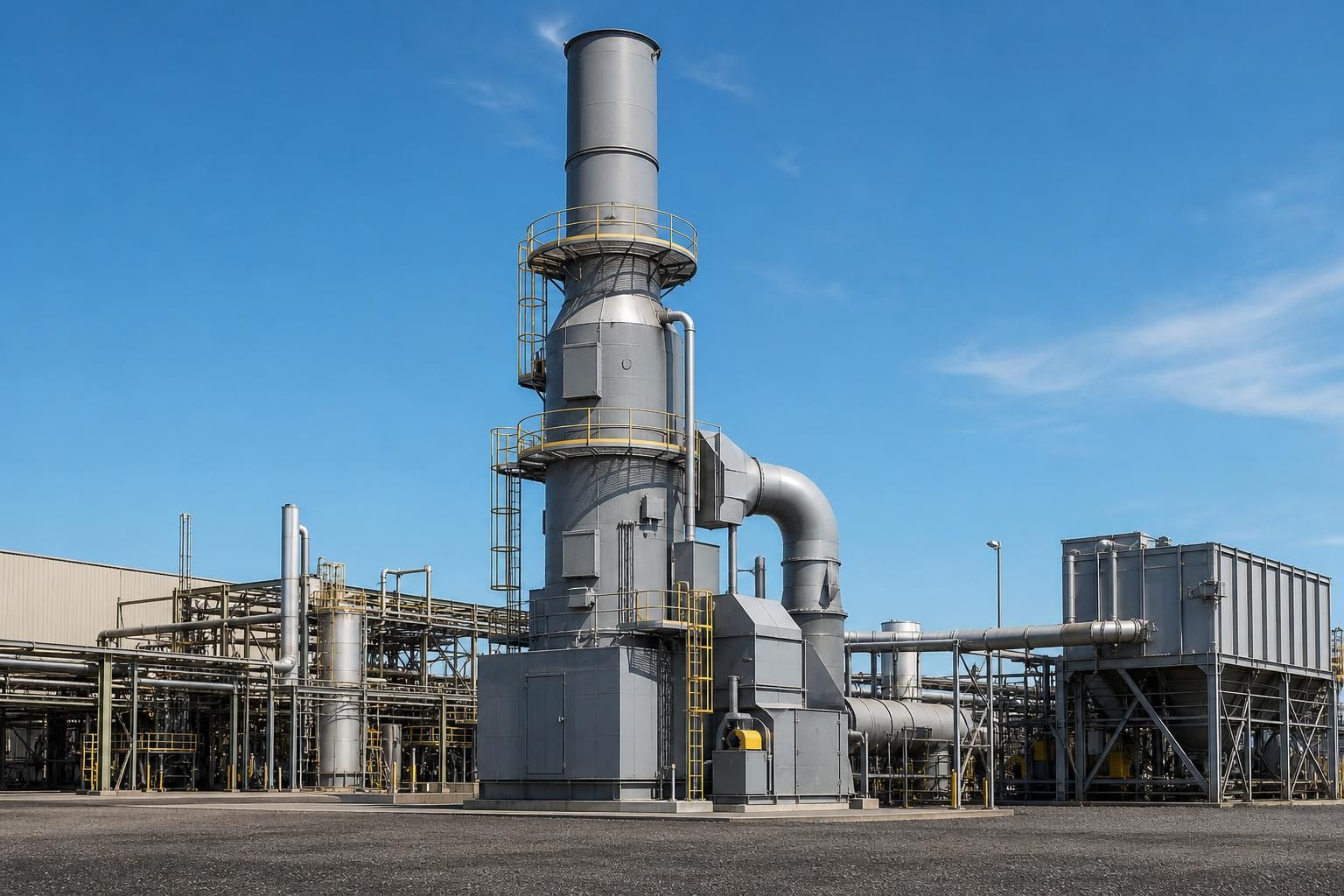
Engineers who deal with waste gas streams eventually face the same question: should this stream go to a flare or to a thermal oxidizer? Both destroy hydrocarbons and other combustible compounds by burning them. Both are widely used. But they behave differently, cost differently, and fit different jobs. This guide walks through the main differences so facility teams can ask better questions in 2026 when specifying equipment.
The Basic Difference
A flare burns gas in the open, at the top of a stack, with little control over the combustion environment. A thermal oxidizer burns gas inside an insulated chamber, where temperature, residence time and mixing can be managed. That enclosure is the core distinction. It is why oxidizers generally offer more controlled destruction, and why flares remain popular where flows are large, intermittent or unpredictable.
Where Flares Make Sense
Flares handle wide swings in flow and composition well. They are the traditional answer for emergency relief, upset conditions and gas that is only occasionally released. They are also simpler mechanically, with fewer components to maintain. For operators weighing the pros and cons, the real thermal oxidizer vs flare question usually comes down to how steady the stream is, how clean the combustion must be, and what the permit requires.
- Large or highly variable gas flows
- Emergency and upset relief service
- Remote locations without utilities
- Applications where cost of capital must stay low
Where Thermal Oxidizers Make Sense
Thermal oxidizers are a better fit when a facility needs consistent, measurable destruction of a steady stream, particularly where there are limits on emissions or visible flame. The enclosed chamber also hides the flame, which can matter near neighbors or in sensitive areas. Typical applications include process vents, tank vapors, and streams with lower heating value that need supplemental fuel to burn well.
- Steady or moderately variable streams
- Locations where visible flame or light is a concern
- Sites with performance testing or monitoring requirements
- Streams that benefit from controlled temperature and retention time
The Role of Burner Design
Whichever path a facility chooses, the burner is the part that decides whether combustion is clean and stable. Nitrogen oxide formation depends heavily on flame temperature and mixing, so burner design has a direct effect on emissions. Where permits or local air rules tighten NOx limits, an ultra low nox burner can become a key part of the project. Burner selection should be reviewed alongside the fuel, the turndown needs and the chamber design, not treated as a standalone catalog purchase.
Operating Cost Considerations
Capital cost is only part of the picture. Thermal oxidizers consume supplemental fuel when the waste stream does not carry enough energy to sustain combustion, and that fuel cost can add up. Heat recovery options can reduce it in some designs, though they add complexity and capital. Flares usually need only pilot fuel, plus purge gas where required. When comparing, build a simple lifecycle estimate that includes fuel, maintenance, inspection and any required testing.
Compliance and Documentation
Regulators and customers often want evidence that a combustion device is performing. Enclosed devices can make it easier to demonstrate temperature and retention time through instrumentation and records. Open flares rely more on design standards, operating practices and visual or continuous monitoring. Whichever you choose, confirm with your environmental team which rules apply to your facility type and location before committing to a design.
A Simple Decision Framework
- Characterize the stream: flow range, composition, heating value, pressure and contaminants.
- List the compliance requirements that apply to the facility.
- Identify site constraints such as space, utilities and proximity to neighbors.
- Compare lifecycle cost, not just purchase price.
- Consider a hybrid arrangement, such as an oxidizer for the steady stream with a flare as backup for upsets.
Maintenance Realities
Both technologies reward regular attention. Flares need pilot monitoring, ignition system checks and inspection of the stack and tip. Oxidizers need inspection of refractory, burners, controls and heat exchange surfaces where fitted. Keep spare parts for items that stop production when they fail, and keep operators trained on normal and abnormal conditions.
Frequently Asked Questions
Is a thermal oxidizer always better than a flare?
No. Each suits different conditions. Flares tolerate variable flows well, while oxidizers offer more controlled combustion for steady streams.
Why do oxidizers need supplemental fuel?
If the waste gas has low energy content, extra fuel is needed to hold the chamber at the required temperature.
Can I use both on the same site?
Yes. Many facilities pair an oxidizer for routine flow with a flare for emergencies or upsets.
Does burner choice affect emissions?
Yes. Flame temperature and mixing strongly influence NOx formation, so burner design matters.
What should I gather before asking for a quote?
Flow range, composition, heating value, pressure, available utilities and applicable permit limits.
The right answer depends on the stream, the site and the rules that apply. With good data and a clear view of lifecycle cost, the choice between a flare and a thermal oxidizer becomes much easier to defend.